
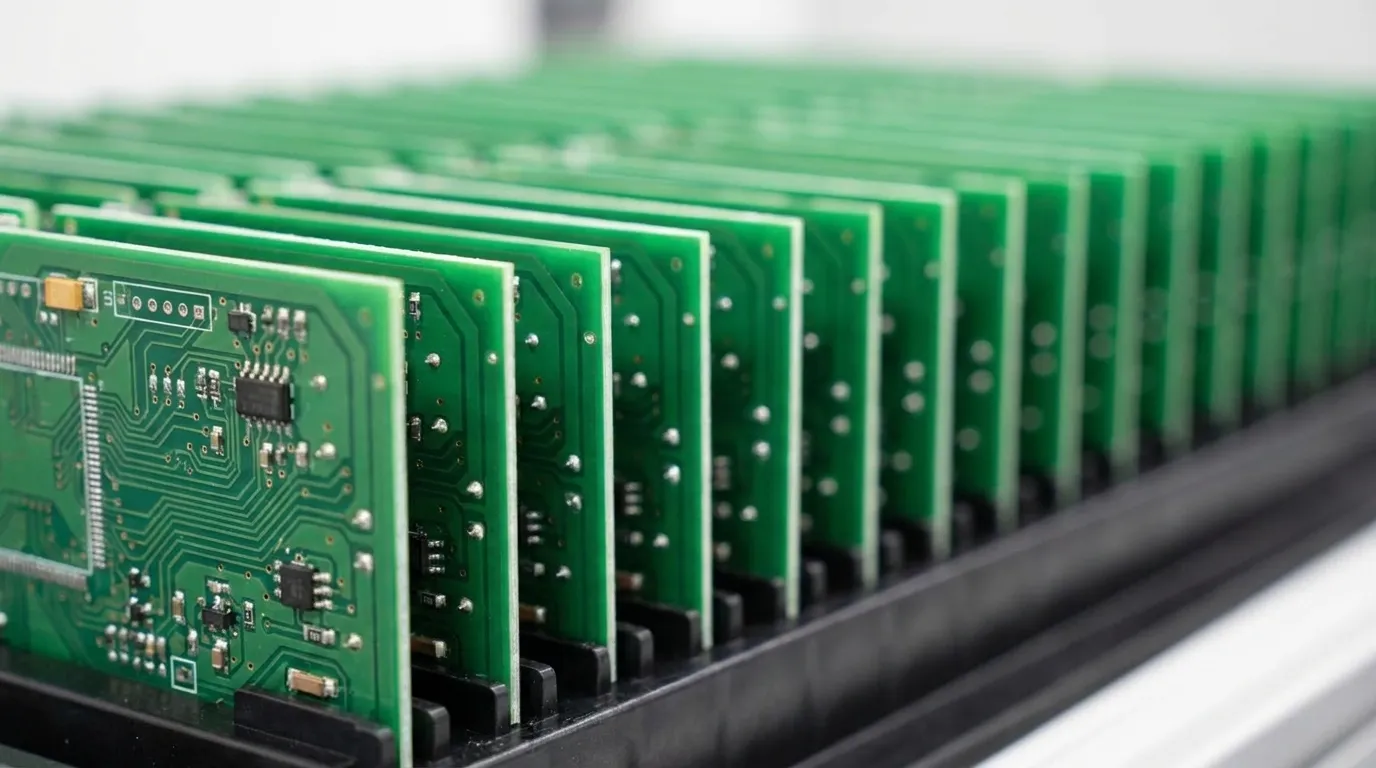
Key Takeaways For Power Electronics Teams
- Silver sintering creates high-reliability die-attach joints for SiC and GaN devices through solid-state atomic diffusion at temperatures below silver’s melting point.
- The process follows six critical steps: substrate preparation, paste application, drying, die placement, sintering and final inspection. Each step carries specific failure modes that require control.
- Engineers select pressure-assisted sintering for maximum joint density or pressureless sintering for fragile dies or higher throughput. Modern pastes can support strong joints with either method.
- Process parameters such as temperature, time, pressure, particle morphology and paste formulation govern joint porosity, shear strength and long-term reliability.
- Pro-Active Engineering combines silver sintering expertise with complete thermal management capabilities. Contact the team to review silver sintering requirements for a specific program.
How Silver Sintering Supports High-Power Electronics
Silver sintering forms a strong metallurgical bond between a semiconductor die and a substrate. It uses silver particles under heat, with or without pressure, without melting the silver. Sintering is driven by atomic diffusion and surface energy reduction: powder particles have large surface area and diffusion minimizes that energy by forming necks between particles and eliminating pores.
Sintering occurs at temperatures below the melting point of the base material and densifies joints through solid-state diffusion. Silver sintering does not involve melting. Atoms migrate across particle boundaries, form necks and densify the bond line. The joint remains structurally stable at temperatures that exceed limits for conventional solders.
Typical applications include die attach for power modules, high-temperature electronics and wide-bandgap semiconductors in EV inverters, aerospace power systems and industrial drives. Silver sintering is emerging as the preferred die-attach technology for wide-bandgap power semiconductors like SiC and GaN because silver offers high thermal conductivity and a melting point of 961.8°C, which supports reliable operation above 250°C. To capture these benefits, the process must follow a controlled sequence.
Step-By-Step Silver Sintering Workflow
- Substrate And Die Preparation – Cleaning and surface treatment establish the foundation for a reliable bond. Silver surface finishing on chips and substrates improves joint quality because the matching lattice constant supports diffusion of silver atoms. Wang et al. reported that for pressureless sintering on copper substrates, a surface roughness slightly larger than the silver nanoparticle diameter enabled shear strengths above 50 MPa through strong metallic bonding. This behavior makes oxide control on copper surfaces essential before paste application.
- Paste Application – Silver sintering paste is applied via screen printing, stencil printing or dispensing. Paste formulations vary in particle size and morphology. Spherical silver particles show low sintering efficiency and higher porosity because of limited contact areas, while flake-based and hybrid formulations pack more effectively and reduce porosity. Print thickness and uniformity directly influence final bond line quality.
- Drying – Solvents must leave the paste before sintering to limit voiding. A pre-cure stage under nitrogen atmosphere drives off solvents before the sintering stage begins. Voids can originate from entrained air, solvent or decomposition gas, poor wetting and packing gradients. Incomplete drying often triggers these issues. Drying profiles require validation for each paste formulation and substrate combination.
- Die Placement – The die is placed onto the dried paste using pick-and-place equipment. Alignment accuracy and placement force affect bond line uniformity. Consistent placement pressure keeps the die in even contact with the paste, which influences void distribution in the final joint.
- Sintering – Heat and pressure, or pressureless conditions, form the metallurgical bond. Pressure-assisted sintering profiles and pressureless profiles differ in time and temperature requirements, and pressureless sintering requires longer dwell times to reach comparable densification. Increasing sintering temperature reduces joint porosity significantly, and porosity and shear strength follow an exponential decay relationship.
- Cooling And Inspection – Controlled cooling to room temperature forms part of the process flow, with samples allowed to cool naturally after the sintering hold. Quality checks follow. Shear testing, void inspection via scanning acoustic microscopy and thermal resistance measurement confirm joint integrity before the assembly advances.
Each step in the silver sintering process carries specific failure modes. Pro-Active Engineering’s integrated workflow manages these risks through coordinated surface preparation, paste selection, drying validation and inspection. Connect with Pro-Active Engineering to review a silver sintering workflow for an upcoming design.
Pressure-Assisted And Pressureless Sintering Choices
The sintering step can run in two primary ways, and each path carries distinct trade-offs. Two process variants define silver sintering in production environments. The choice depends on die fragility, equipment availability, throughput requirements and reliability targets.
Pressure-assisted sintering applies external pressure during the thermal cycle. Conventional silver sintering pastes can require process pressures up to 30 MPa, while pressure-optimized silver systems operate at lower pressure ranges and reduce cost. Higher pressure produces denser joints with lower porosity and higher reliability. This approach requires specialized equipment and can stress fragile dies.
Pressureless sintering eliminates external pressure and simplifies equipment. When applied pressure is low or absent, sintering time extends compared with pressure-assisted processes. Recent research trends favor pressureless sintering to reduce process complexity and cost, and modern paste formulations can reach shear strengths above 40 MPa without pressure.
Pressureless sintering suits fragile dies, thin substrates or high-throughput applications where die stress matters. Pressure-assisted sintering supports maximum reliability in mission-critical applications. Sintering serves as the established process for attaching SiC dies in high-power EV inverters, while soldering remains common for mass-market EVs because of lower cost. Pro-Active Engineering maintains expertise in both methods and guides process selection based on application requirements.
Key Process Parameters In Silver Sintering
Process parameters shape joint quality more than any other factor. Each parameter introduces specific trade-offs that affect density, strength and reliability.
- Temperature: Low-temperature sintering silver pastes densify into high-conductivity bonds at temperatures below silver’s melting point and support power device die attach for EV inverters and industrial drives. Higher temperatures increase density and joint strength but raise oxidation risk and thermal stress on components.
- Time: Pressure-assisted processes complete in shorter dwell times, while pressureless sintering requires longer holds to reach comparable densification. Longer times improve bond quality but reduce throughput.
- Pressure: PINK Thermosysteme sintering systems support process pressure ranges for diffusion soldering and pressure-reduced sintering pastes, while conventional silver sintering pastes require higher pressures. Higher pressure produces denser joints and increases die stress and equipment cost.
- Particle Size And Morphology: Silver nanoparticles can agglomerate during storage and sintering, which creates high-porosity joints. Submicron flake pastes achieve lower porosity and higher joint strength through better packing geometry. Leading suppliers invest in silver nanowire and flake architectures that form conductive networks at lower fill fractions.
- Paste Formulation: Solvent systems, organic binders and additives influence drying behavior, void formation and final joint properties. Advances in binder polymer chemistry support lower-temperature sintering profiles that improve throughput and reduce energy consumption.
Advantages And Limitations Of Silver Sintering
Silver sintering delivers performance that aligns with the demands of wide-bandgap power electronics. The approach also introduces cost and process constraints that require careful planning.
Advantages:
- Silver sintering paste can reach thermal conductivity above 200 W/m·K compared with less than 65 W/m·K for solder preforms.
- Sintered modules can withstand more than 2,000 thermal cycles with minimal delamination or voiding.
- A fully sintered module is expected to last about four times longer than a fully soldered module.
- Joints remain stable near silver’s melting point and support high-temperature operation.
- Silver sintering supports lead-free, RoHS-compliant assemblies.
- Large area sintering provides an effective solution for SiC chips that operate above 175°C.
Disadvantages:
- Soldering can cost more than 10 times less than silver-paste sintering.
- Pressure-assisted processes require specialized sintering equipment.
- Voiding can arise from incomplete drying, entrained air, poor wetting and packing gradients when process control falls short.
- Sintered joints present rework challenges and can risk die or substrate damage during removal.
- Surface metallization requirements apply. Silver or gold finishes support diffusion, and copper surfaces require careful oxide management.
Silver Sintering And Soldering Compared
Sintering and soldering form joints through different mechanisms. Sintering bonds particles through solid-state atomic diffusion without liquefying the silver. Soldering melts a joining alloy such as SAC alloys and then re-solidifies it to form the joint.
Replacing a soldered die attach with sintered interconnects can reduce maximum die temperature by more than 10°C, which can double die lifetime. Sintered silver attachments can last up to 30 times longer than conventional soldered connections in large-area baseplate modules.
Standard SAC alloys melt at temperatures close to SiC junction temperatures, which narrows the safe operating window. Soldering remains viable for lower-stress applications and offers cost and process simplicity where junction temperatures remain within solder alloy limits.
Common Silver Sintering Defects And Prevention
Three defect categories account for most silver sintering failures: voiding, cracking and delamination. Each category has distinct root causes and prevention strategies.
Voids can originate from entrained air, solvent or decomposition gas, poor wetting, surface noncontact, packing gradients, shrinkage mismatch, pressure shadowing or cracks. Equal void fractions can show different electrical or mechanical effects because location, connectivity, size, shape and distance from the current-transfer path all matter. Prevention centers on validated drying profiles that remove solvents before sintering begins.
Ceramic substrates have coefficients of thermal expansion that differ from metals, and repeated heating and cooling create thermal stresses at interfaces that drive crack initiation and growth. Sharp corners, limited edge clearance and abrupt changes in section geometry create local stress concentrations that reduce structural reliability. Design optimization that removes sharp corners and maintains adequate edge clearance reduces cracking risk.
Delamination often results from surface contamination, inadequate metallization or insufficient sintering energy. Incomplete contact formation in silver sintering can arise from surface oxide residue, atmosphere quality, actual temperature, time, pressure, metallization or interface state. Reducing porosity from higher levels to low single-digit percentages improves joint strength and follows an exponential relationship between porosity and shear strength.
Why Pro-Active Engineering Leads In Silver Sintering
Pro-Active Engineering integrates silver sintering into a complete design-to-production workflow. Silver sintering, direct thermal path technology and advanced metal-core constructions operate as parts of a unified thermal management capability.
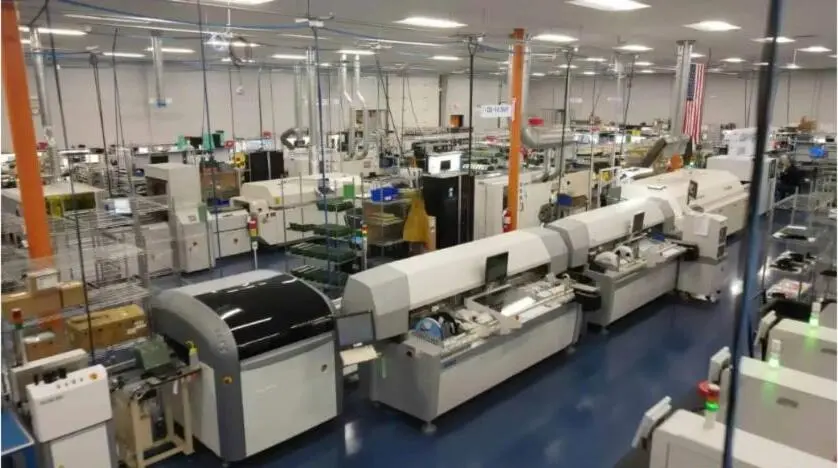
The 45,000 sq ft facility in Sun Prairie, Wisconsin, houses engineering, prototyping, assembly and inspection under one roof. With more than 30 years of experience and a workforce of over 120 electronics professionals, Pro-Active supports mission-critical defense, aerospace and medical programs that demand long-term reliability and full traceability.
Certifications include ISO 9001:2015, AS9100, ITAR registration, JCP and Nadcap accreditation. These certifications reflect the disciplined process control that silver sintering requires. A single accountable partner manages the full program from DFM through production.
Schedule a silver sintering review with Pro-Active Engineering to align design goals, reliability targets and process capabilities.
Silver Sintering Process: Frequently Asked Questions
What Is The Typical Temperature Range For Silver Sintering?
Silver sintering occurs at temperatures below silver’s melting point. Pressure-assisted processes typically complete at lower temperatures in shorter dwell times, while pressureless sintering generally requires higher temperatures or longer holds to reach comparable joint density. The specific profile depends on paste formulation, substrate metallization and application requirements.
What Are The Disadvantages Of Silver Sintering?
Silver sintering carries higher material and equipment costs compared with soldering. Pressure-assisted processes require specialized sintering equipment. Voiding risk increases when drying profiles fall short or process control drifts. Sintered joints offer limited reworkability, and removing a sintered die without damaging the substrate or die presents challenges. The process also requires specific surface metallization, typically silver or gold finishes, to support diffusion and reliable bond strength.
Is Sintering The Same As Melting?
Sintering operates as a solid-state diffusion process where particles bond without liquefying the material. Silver sintering occurs at temperatures below silver’s 961°C melting point. Melting involves a complete phase change of the joining material. In sintering, atoms migrate across particle boundaries, form necks and densify the bond, while the silver remains solid.
What Is The Difference Between Annealing And Sintering?
Annealing is a heat treatment applied to an already solid material to relieve internal stresses without changing its shape or joining it to another material. Sintering joins separate powder particles into a coherent solid through diffusion. In silver sintering, discrete particles fuse into a new joint structure. In annealing, an existing structure is stress-relieved. The two processes serve different purposes and act on different material states.
How Does Silver Sintering Compare To Soldering For SiC Devices?
Silver sintering suits SiC devices because sintered joints withstand operating temperatures that standard solder alloys cannot handle reliably. SAC solder alloys melt at temperatures close to SiC junction temperatures, which narrows the margin. Sintered silver delivers thermal conductivity above levels that solder preforms reach, which reduces die temperature and extends device lifetime. Soldering remains viable for lower-power applications where junction temperatures stay within solder alloy limits.
What Is Pressureless Sintering?
Pressureless sintering removes external pressure during the thermal cycle. The process relies on longer dwell times or higher temperatures to achieve densification comparable to pressure-assisted methods. It reduces equipment complexity and die stress, which benefits fragile dies and thin substrates. Modern paste formulations have improved pressureless sintering performance, and some reach shear strengths comparable to pressure-assisted processes.
How Do Engineers Choose Between Pressure-Assisted And Pressureless Sintering?
Pressureless sintering suits fragile dies, thin substrates or applications where equipment simplicity and reduced die stress matter most. Pressure-assisted sintering supports maximum joint density and reliability in mission-critical applications such as high-power EV inverters or aerospace power modules. The decision depends on die fragility, throughput requirements, available equipment and reliability targets. A manufacturing partner with experience in both methods can evaluate the trade-offs for a specific program.
What Are Common Defects In Silver Sintered Joints And How Can They Be Avoided?
Voiding, cracking and delamination appear as the primary defect categories. Voiding often results from incomplete solvent removal, entrained air or poor wetting, and controlled drying profiles serve as the primary prevention lever. Cracking stems from coefficient of thermal expansion mismatch between the die, sinter layer and substrate, and sharp geometry or abrupt section changes can intensify this effect, so design optimization addresses it early. Delamination often results from surface contamination, inadequate metallization or insufficient sintering energy, and clean surface preparation with validated process parameters limits this risk. Systematic process control and post-sinter inspection via scanning acoustic microscopy confirm joint quality before assemblies advance.