
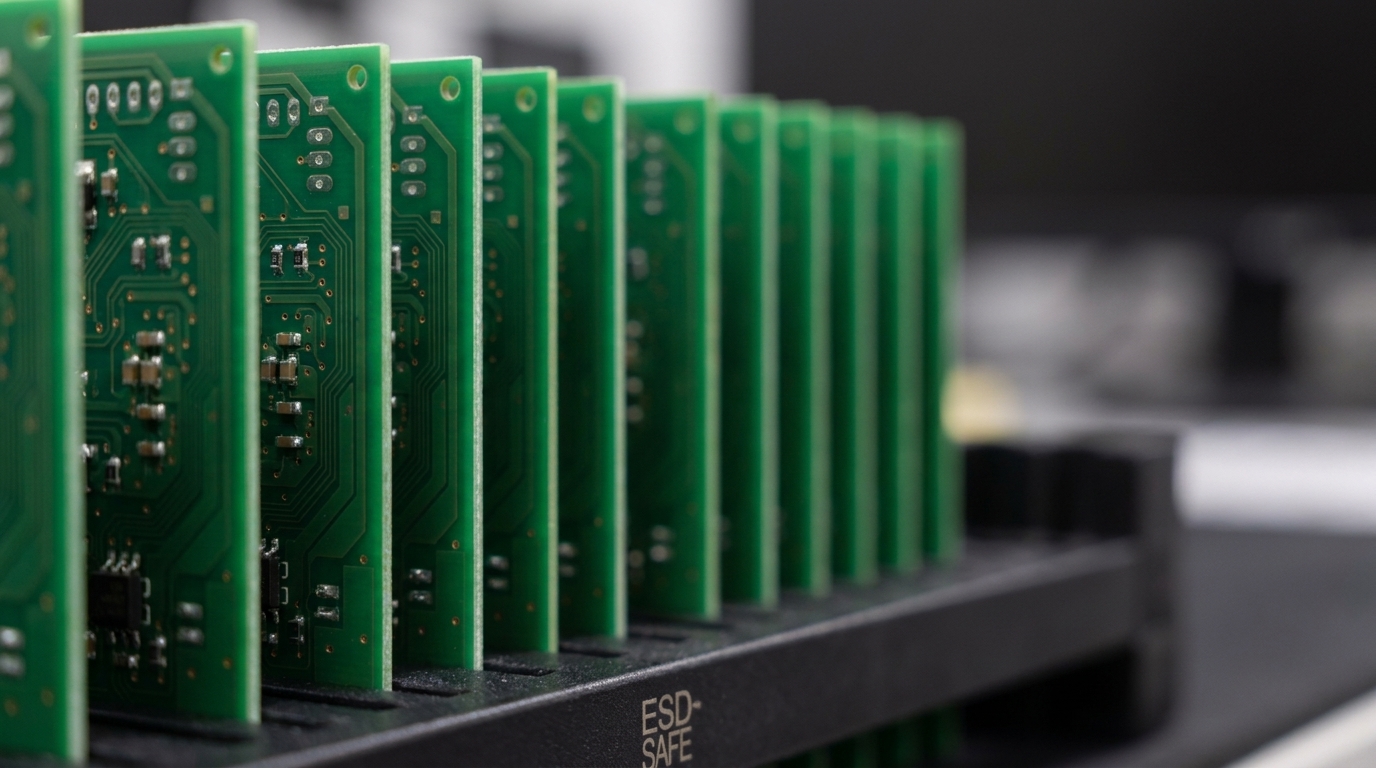
Integrated PCB Development at a Glance
- Fragmented PCB vendors create delays, communication gaps and supply chain risks that threaten defense and aerospace timelines.
- Integrated US manufacturers like Pro-Active Engineering consolidate design, prototyping, assembly and testing under unified quality systems.
- Production-ready prototyping uses consistent processes from early builds through volume runs, reducing requalification and scaling surprises.
- Certifications including ITAR, AS9100 and JCP support compliance and security for mission-critical applications.
- Pro-Active Engineering’s Speed Shop delivers ITAR-compliant quick-turn prototypes, request a quote to accelerate the next project.
The Cost of Fragmented PCB Development
Traditional PCB development relies on multiple vendors across the supply chain, which creates risks that threaten program success. Design firms handle initial layouts but lack manufacturing insight, so manufacturability issues surface late. Separate fabrication and assembly vendors operate with different quality standards and communication protocols. Offshore suppliers add IP leakage risks, shipping delays and yield loss from higher defect rates.
These disconnects create prototype-to-production gaps where designs that work in development fail during scaling. Component sourcing becomes reactive, which causes delays when parts become unavailable. Quality issues emerge late in the process when corrections are most expensive and time consuming.
Integrated US manufacturers address these challenges by consolidating design, prototyping, assembly and testing under unified quality systems. Pro-Active Engineering applies this model through PCB design, rapid prototyping via the Speed Shop, advanced assembly and full system integration. Learn how Pro-Active simplifies workflows and request a quote.
Production-Ready Prototyping in Practice
A defense electronics project with a complex multilayer board and advanced thermal management demands rapid, reliable iteration. Traditional approaches often rely on separate design consultants, offshore fabrication and local assembly shops, each with different standards and timelines.
Pro-Active Engineering’s integrated model manages this type of project through unified processes. The Speed Shop builds early units on the same equipment with the same materials and quality controls used for production runs. Advanced interconnect capabilities such as wire bonding and silver sintering support complex thermal solutions from the first builds. ITAR registration and AS9100 certification support compliance throughout development.
This approach delivers predictable scaling from early units through production without disruptive process changes. Engineering teams receive prototypes that reflect real manufacturing performance, which reduces late-stage surprises and rework cycles. These results depend on disciplined quality systems that remain consistent as volume grows.
Quality and Compliance Benchmarks for Defense PCBs
Mission-critical applications require manufacturers with proven quality systems and regulatory compliance. Leading US PCB manufacturers typically hold ISO 9001, AS9100 and ITAR certifications to support defense and aerospace sectors. Additional indicators include IPC-A-610 Class 3 workmanship standards, AOI inspection capabilities and NIST cybersecurity alignment.
Pro-Active Engineering maintains ISO 9001:2015, AS9100, ITAR registration and JCP certification. Nadcap accreditation validates advanced processes, and NIST 800-171 alignment supports secure data handling for sensitive programs.
How Pro-Active Solves Common PCB Development Challenges
Vendor Fragmentation vs. Single Accountable Partner
Managing separate vendors for design, fabrication, assembly and testing creates coordination overhead and accountability gaps. Pro-Active Engineering consolidates these functions through integrated capabilities including PCB layout, firmware development, SMT and through-hole assembly, conformal coating and complete box build services. This single-source approach reduces vendor friction and maintains visibility across the entire development process.
Late Manufacturability Issues vs. Built-In DFM
Traditional development discovers manufacturing constraints after design completion, which forces expensive redesigns and schedule delays. Upfront DFM reviews identify design errors and manufacturing obstacles before production and prevent costly iterations. Pro-Active Engineering brings manufacturing expertise into the design phase through engineering-driven processes that prepare layouts for scalable, reliable production.
Slow Prototyping Cycles vs. Rapid, Production-Style Builds
Standard prototyping often relies on different processes than production, which creates transition risks and longer development cycles. Leading quick-turn providers deliver prototypes with short lead times using dedicated production lines. Pro-Active Engineering’s Speed Shop runs with 1-piece minimum order quantities while maintaining full production processes including AOI inspection and functional testing.
Compliance Gaps vs. Certified Security
Defense and aerospace programs require secure, traceable manufacturing that many commercial suppliers cannot support. Pro-Active Engineering’s ITAR registration and JCP certification support handling of controlled technical data while maintaining full material traceability and process documentation for mission-critical applications.
Limited Advanced Capabilities vs. Integrated Expertise
Complex applications often need specialized processes such as wire bonding, flip chip assembly or advanced thermal management that exceed standard PCB assembly capabilities. Pro-Active Engineering provides these advanced interconnect and packaging solutions under the same quality systems used for standard assembly. This structure supports sophisticated designs without expanding the vendor list. Get a fast prototype quote for advanced interconnect requirements.
How Pro-Active Compares in the Quick-Turn Market
The US quick-turn PCB market includes several provider types with distinct advantages and limits. Large EMS providers such as Milwaukee Electronics and Ducommun offer substantial capacity but often prioritize high-volume programs over rapid prototyping and engineering collaboration. Offshore brokers provide low unit costs but add geopolitical risks, IP exposure and longer logistics cycles that conflict with rapid development needs.
Integrated US manufacturers combine domestic security with engineering-driven flexibility. The following differentiators separate integrated manufacturers from large EMS providers and offshore brokers:
- ITAR-compliant processes vs. offshore IP risks
- Engineering-led development vs. volume-focused operations
- End-to-end accountability vs. fragmented vendor management
- Prototypes built with production-style methods vs. separate development processes
Due Diligence and Risk Management for PCB Sourcing
Selecting quick-turn PCB partners requires evaluation beyond unit pricing and lead times. Essential criteria include relevant certifications, integrated workflow capabilities, advanced process availability and nationwide service support. These criteria matter most for high-mix, low-to-medium volume applications, where engineering-driven manufacturers with flexible production systems deliver greater value than volume-focused alternatives.
Total cost of ownership should include rework rates, development cycle time and supply chain risk rather than only per-unit pricing. Prototype-to-production scalability forms a key part of this total cost view because it prevents costly transitions and requalification cycles that inflate long-term expenses.
Frequently Asked Questions
What are typical lead times for quick-turn PCB prototypes in the United States?
Industry standards show short lead times for simple 2-4 layer boards and assembled prototypes with in-stock components. Complex designs with 6 or more layers or specialty materials require additional time. Pro-Active Engineering’s Speed Shop delivers consistent prototype timelines through dedicated fast-turn lines and integrated processes.
How does domestic PCB manufacturing compare to offshore options for total cost?
Offshore unit costs often appear lower, yet domestic manufacturing can provide better total cost of ownership when logistics risks, quality issues, IP protection and development cycle time enter the analysis. Reduced shipping delays, faster iterations and fewer customs complications often offset higher per-unit pricing for prototype and low-volume applications.
Can ITAR-compliant quick-turn PCB services scale to production volumes?
Integrated manufacturers such as Pro-Active Engineering support scaling from early builds through production while maintaining ITAR compliance and quality certifications. Consistent processes across volume levels reduce requalification requirements and support stable performance as demand grows.
What should companies consider when switching PCB vendors?
Pilot projects help validate quality, communication and delivery performance before shifting critical programs. Evaluation should include integrated capabilities, certification alignment and engineering support rather than pricing alone. The new vendor should support current requirements and planned future scaling.
Do US-based manufacturers serve customers outside their local regions?
Most established US PCB manufacturers, including Pro-Active Engineering, serve customers nationwide through coordinated logistics and communication systems. Domestic shipping supports faster delivery and fewer complications than many international options while maintaining direct engineering access.
How do quick-turn services transition to full production?
Integrated manufacturers keep processes, equipment and quality systems aligned from early units through production. This process consistency, established during prototyping, supports smooth transitions as volume scales and avoids delays from requalifying new manufacturing methods.
Conclusion: Integrated Speed and Security for 2026 Programs
Pro-Active Engineering represents a leading model for fast quick-turn PCB prototype manufacturing in the United States for 2026. The integrated approach addresses critical challenges facing defense and aerospace programs through consolidated workflows, production-style prototyping and comprehensive compliance capabilities. Success factors include ITAR registration, advanced interconnect expertise, rapid Speed Shop services and dependable prototype-to-production scaling.
Contact Pro-Active Engineering for quick-turn PCB prototypes that accelerate development while supporting mission-critical performance, and request a quote today.