

Key Takeaways
- ITAR-compliant defense electronics manufacturing requires DDTC registration, documented U.S.-person controls, a Technology Control Plan, five-year record retention and party screening against multiple denied-party lists.
- Compliance functions as an ongoing operating expense, not a one-time project, and established partners remove the risk of building compliance mid-program.
- Common violations stem from misclassification, deemed exports, recordkeeping failures and unauthorized data transfers, and most are unintentional yet preventable with proper controls.
- A six-criteria evaluation framework covering engineering depth, prototyping fidelity, manufacturing scope, quality certifications, supply-chain resilience and lifecycle support helps buyers qualify reliable domestic partners.
- Pro-Active Engineering offers the full compliance infrastructure and integrated workflow defense programs need; discuss program requirements with the team.
Core ITAR Requirements for Defense Electronics Manufacturers
Any U.S. person engaged in manufacturing defense articles must register with the Directorate of Defense Trade Controls (DDTC) under 22 CFR Part 122 before manufacturing begins, even when no export is planned. Registration itself does not certify compliance, and it functions as a precondition for any subsequent license or approval.
Beyond registration, a compliant program relies on several interlocking controls.
- U.S.-person controls: ITAR-controlled technical data and defense articles may be accessed only by U.S. persons unless DDTC authorization permits otherwise. An Empowered Official, a U.S. person with authority to bind the company, must be designated and must personally certify export license applications.
- Physical and data security: A Technology Control Plan must address physical controls, IT controls, personnel screening, visitor procedures, annual training and incident response for companies handling controlled items.
- Material traceability and recordkeeping: ITAR requires a five-year retention period for all export licenses, technical data disclosures, shipping documents and training records.
- Party screening: Before any transfer of controlled items or data, companies must screen all parties against the AECA Debarred List, OFAC SDN List, BIS Entity List and Denied Persons List, with results documented.
Pro-Active Engineering maintains active DDTC registration, JCP certification (DD Form 2345) and alignment with NIST 800-171, which provides the documented compliance infrastructure that defense programs require from a manufacturing partner.
Cost Structure of Building and Maintaining ITAR Compliance
Compliance costs vary by organizational size and complexity. First-year program setup costs depend on company size and operational complexity, and they cover DDTC registration fees, USML classification reviews, Empowered Official training, compliance documentation, employee training, recordkeeping infrastructure and legal reserves. Year-two costs typically fall to a lower recurring range once documentation, training frameworks and infrastructure are established.
Organizations that treat ITAR compliance as a one-time setup project routinely fall out of compliance within twelve to eighteen months. Classifications change, licenses expire, subcontractors shift and employees turn over, and each change requires active management. Ongoing maintenance, including annual training, risk assessments, license renewals and audit readiness, represents a sustained operating expense that prevents these gaps.
For defense program managers evaluating a manufacturing partner, the practical implication remains clear. A partner with an established compliance infrastructure reduces onboarding burden and removes the risk of a supplier building compliance from scratch mid-program. Pro-Active Engineering’s existing ITAR registration, certifications and documented processes transfer that burden away from the buyer.
Frequent ITAR Violations in Defense Electronics Manufacturing
Most ITAR violations do not involve intent. Across more than 200 client engagements, compliance consultant Jared Clark found that violations cluster into recurring patterns, with unauthorized exports from misclassification identified as the most common root cause. The following violation types appear most frequently in defense electronics manufacturing.
- Misclassification: Companies assume a part is commercial or EAR-controlled when it is actually a defense article on the USML, which creates repeated unauthorized shipments without a license, and each shipment counts as a separate violation.
- Deemed exports: Releasing technical data to a foreign person inside the United States is treated as an export to that person’s country of citizenship and requires the same State Department authorization as a physical shipment abroad.
- Recordkeeping failures: Missing shipment files or untracked technical data transfers constitute independent violations and compound exposure by preventing companies from demonstrating compliance during investigations.
- Unauthorized transfers in ordinary workflows: Emailing CAD files abroad, granting unauthorized repository access, sharing controlled designs in meetings and using unsecured cloud collaboration tools create frequent violation points in engineering workflows.
Recent enforcement actions illustrate the scale of exposure. RTX resolved 750 alleged violations with a $200 million settlement. Boeing resolved alleged violations with a $51 million settlement. GE Aerospace reached a $36 million settlement.
Pro-Active Engineering mitigates these risks through controlled access procedures, documented employee training, party screening and a Technology Control Plan that governs how technical data is handled throughout the design and manufacturing workflow.
Evaluation Framework: Engineering Depth for Manufacturable Designs
A manufacturing partner’s engineering capability determines whether manufacturability problems surface at the design stage or at first article inspection. Partners without in-house design capability cannot integrate DFM early, which creates late-stage redesigns, schedule slippage and cost overruns.
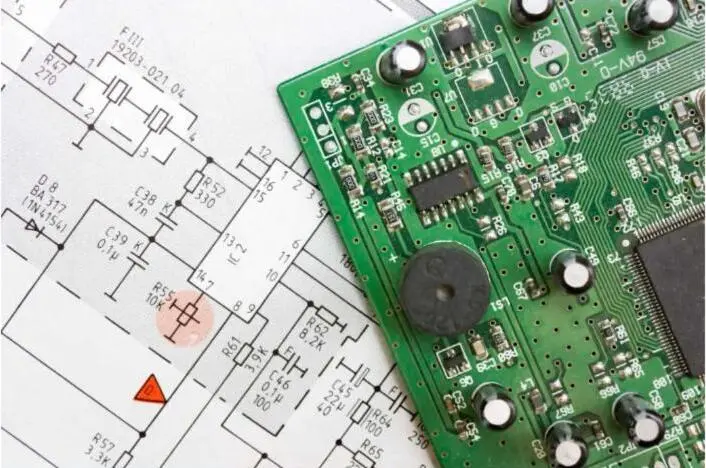
Pro-Active Engineering’s in-house team covers PCB layout, embedded control design, firmware development, mechanical integration and test fixture design. DFM is embedded from the first design review, not applied as a post-design gate. This integration narrows the gap between what engineering specifies and what manufacturing can reliably produce at volume.
Evaluation Framework: Prototyping Capability That Mirrors Production
Prototype fidelity determines how predictably a design scales to production. Prototypes built on different processes, equipment or materials than production introduce risk that only surfaces after program commitments are made.
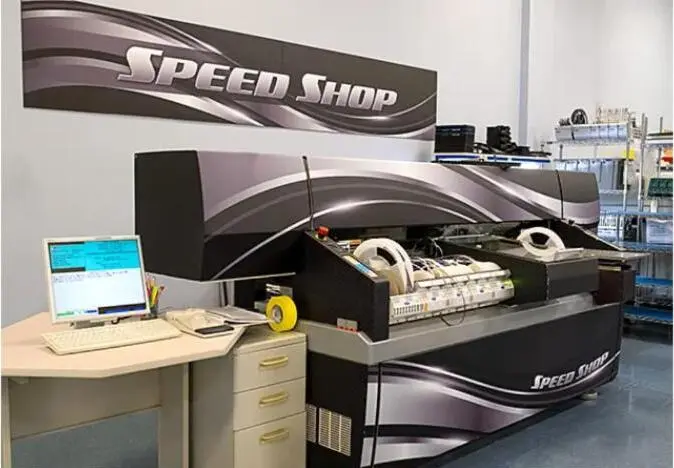
Pro-Active Engineering’s Speed Shop delivers rapid prototypes using the same SMT and through-hole processes as full production runs, with AOI and inspection included. A minimum order quantity of one unit supports early-stage R&D and design validation without requiring volume commitments. This approach produces a prototype that reflects production reality from the start.
Start a prototype build with Pro-Active Engineering.
Evaluation Framework: Manufacturing Scope Under One Roof
Vendor fragmentation represents one of the most common sources of program risk in defense electronics. Nearly half of manufacturers cite poor communication across product and supply chain teams as a major obstacle, a problem that persists even as 88 percent pursue onshoring or nearshoring strategies that should simplify coordination. The root cause is structural, because each handoff between vendors introduces a compliance gap, a communication failure point and a traceability break.
Pro-Active Engineering consolidates PCB assembly, advanced interconnect, thermal management, conformal coating, potting, box build and full system integration under one roof. Wire bonding, flip chip assembly and hybrid high-density assemblies extend capability beyond what traditional EMS providers offer. This scope removes the handoffs that fragment accountability on complex defense programs.

Evaluation Framework: Quality and Compliance Posture
Certifications define the floor of a partner’s quality system. For defense programs, the relevant certifications include ISO 9001:2015 for quality management, AS9100 for aerospace and defense quality requirements, Nadcap accreditation for special processes and ITAR registration for controlled manufacturing. JCP certification (DD Form 2345) is required for access to military specifications and standards.
Pro-Active Engineering holds all of these certifications and is certified to Navy and Army specifications. Workmanship standards follow IPC-A-610 Class 2 and Class 3, soldering follows J-STD-001 and rework follows IPC-7711/7722. Counterfeit avoidance follows SAE AS5553B methodology. Full documentation control and traceability are built into every production order.
Evaluation Framework: Supply-Chain Resilience and Scalability
Supply chain disruptions in the aerospace and defense sector rose 35 percent year-over-year in 2024, which stretched lead times for defense-grade parts and eroded program margins. Average production-material lead times in manufacturing have remained well above pre-pandemic norms, and microcontrollers and analog ICs continue to carry extended lead times.
Pro-Active Engineering integrates SiliconExpert for BOM scrubbing, lifecycle risk mitigation and obsolescence avoidance. This tool surfaces single-source dependencies, end-of-life risks and counterfeit exposure before they affect production schedules. Domestic sourcing reduces geopolitical exposure. The single-partner model, from design through box build, provides the supply chain visibility that fragmented vendor networks cannot match.
Evaluation Framework: Lifecycle Support for Long-Running Programs
Defense programs operate on long service cycles. Electronics built for mission-critical applications must perform reliably under vibration, thermal stress and environmental exposure for years after initial delivery. A manufacturing partner that cannot support ruggedization, long-term documentation and repair standards creates lifecycle risk that compounds over time.
Pro-Active Engineering provides conformal coating, potting, thermal management solutions including silver sintering and direct thermal path technology, and functional testing across the production lifecycle. IPC-7711/7722 rework and repair standards govern any post-production work. This lifecycle capability supports programs from initial prototype through sustained production and field support.

Frequently Asked Questions
What certifications should a defense electronics manufacturer hold?
At minimum, a defense electronics manufacturer should hold ITAR registration with DDTC, ISO 9001:2015 for quality management and AS9100 for aerospace and defense quality requirements. Nadcap accreditation covers special processes such as soldering and conformal coating. JCP certification (DD Form 2345) is required for access to military specifications. IPC-A-610 Class 3 workmanship standards and J-STD-001 soldering standards function as baseline expectations for high-reliability defense assemblies. NIST 800-171 alignment and CMMC readiness are increasingly required for contractors handling Controlled Unclassified Information under DFARS obligations.
How does CMMC relate to ITAR compliance?
CMMC and ITAR are separate regulatory frameworks with overlapping applicability. ITAR governs the physical and informational control of defense articles and technical data under the Arms Export Control Act. CMMC governs the cybersecurity posture of contractors handling Controlled Unclassified Information under DFARS. Compliance with one does not satisfy the other. ITAR-controlled technical data frequently qualifies as CUI, meaning the same design files may simultaneously require ITAR access controls and CMMC-level digital protection. Defense program managers should confirm that a manufacturing partner maintains independent compliance programs for both frameworks. Pro-Active Engineering maintains the cybersecurity posture described above alongside its ITAR registration.
What documentation should a manufacturer provide for traceability?
Full traceability in defense electronics manufacturing requires documentation at every stage of the production workflow. This includes material certifications and certificates of conformance for incoming components, first article inspection reports, process traveler records, AOI and functional test results, conformal coating and potting records and shipping documentation. For ITAR-controlled programs, technical data transfer logs, party screening records and training documentation must also be maintained for a minimum of five years. A manufacturing partner should be able to provide a complete audit trail from raw material receipt through final delivery.
How does a defense program transition from prototype to production with a single partner?
The primary risk in prototype-to-production transitions is process discontinuity, which occurs when the prototype was built on different equipment, materials or inspection standards than the production line. This gap between validated performance and production reality creates rework and delay. A partner that builds prototypes using the same processes, equipment and quality controls as full production removes this gap.
Pro-Active Engineering’s Speed Shop uses production SMT and through-hole lines, AOI and the same documentation controls as volume builds. When a program scales, the process is already validated. Engineering, quality and manufacturing operate within one workflow, so no handoff occurs between a prototype shop and a separate production facility.
What supply chain risks should defense program managers assess when qualifying a manufacturer?
The highest-concentration supply chain risks in defense electronics include single-source components with no qualified alternate, components with extended lead times and parts approaching end-of-life without a replacement roadmap. Counterfeit component risk represents a separate but related concern, particularly for programs sourcing outside authorized distribution channels. Geopolitical concentration, or reliance on components manufactured in regions subject to export restrictions or tariff volatility, adds further exposure.
Program managers should confirm that a prospective partner performs BOM-level lifecycle analysis, screens components against counterfeit avoidance standards such as SAE AS5553B and sources through authorized domestic channels. Pro-Active Engineering integrates SiliconExpert into its production workflow to address these risks proactively.
Conclusion: Applying the Evaluation Framework to Partner Selection
Qualifying an ITAR-compliant defense electronics manufacturer requires assessment across six criteria, including engineering depth and DFM integration, prototype fidelity and speed, manufacturing scope, quality and compliance certifications, supply chain resilience and lifecycle support capability. Each criterion addresses a specific failure mode that creates program risk when left unverified.
Pro-Active Engineering addresses all six within a single integrated workflow. The compliance foundation described earlier combines with operational capability to deliver a complete solution. In-house engineering, the Speed Shop, advanced interconnect, thermal management, box build and SiliconExpert integration operate inside one accountable workflow from concept through production.
Share program details for an initial technical review with Pro-Active Engineering’s team.