
Key Takeaways for Regulated Electronics Programs
- PCBA covers board fabrication, population and testing. Box build extends to complete, tested systems with enclosures, harnesses, firmware and final verification.
- Box build consolidates multiple manufacturing disciplines and vendor handoffs under one partner, which reduces coordination risk and improves throughput.
- Cost drivers shift from board-level NRE and component issues in PCBA to enclosure procurement, system-level fixtures, compliance documentation and coordination expenses at box build scope.
- Defense, aerospace and medical programs gain from a single U.S. partner that maintains ITAR, AS9100, Nadcap, JCP and ISO 9001:2015 certifications for system-level traceability and regulatory requirements.
- Pro-Active Engineering delivers integrated PCB design through full box build and system integration from its Wisconsin facility. Request a quote to evaluate the right manufacturing scope for a regulated program.
PCBA vs Box Build: How the Manufacturing Flows Compare
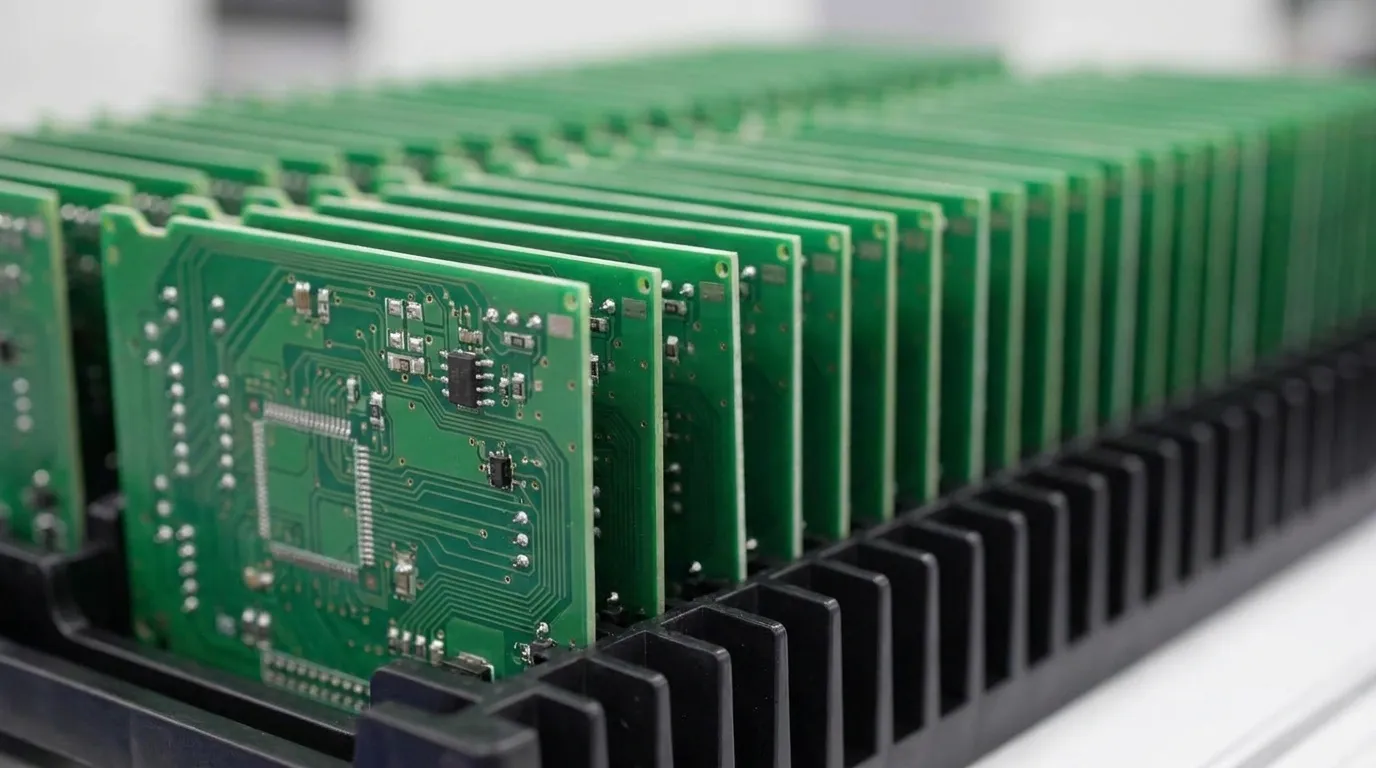
PCBA follows a defined, largely automated process that focuses on the board. The sequence includes surface-mount and through-hole placement, automated optical inspection, X-ray verification for dense packages and in-circuit or functional testing. Documentation covers the board BOM, solder records, inspection reports and lot traceability.
Box build adds disciplines that PCBA does not cover. Box build assembly integrates PCBAs with wire harnesses, enclosures, mechanical hardware, power and thermal components, firmware loading, functional testing, labeling and packaging into a finished product. That scope spans more disciplines than board-level work alone.
The handoff structure changes with scope. PCBA-only outsourcing returns a board to the OEM or a separate integrator. Box build consolidates those handoffs under one program. Fragmented coordination across electronics, mechanical assembly, procurement, testing, quality, packaging and logistics creates additional handoffs, slower throughput and more opportunities for inconsistency compared with a single-partner approach. Those coordination inefficiencies translate directly into cost and risk differences between the two scopes.
Cost and Risk Drivers for PCBA and Box Build Outsourcing
Unit price does not reflect total cost. PCBA cost includes PCB fabrication complexity, material sourcing, component lifecycle issues, inspection and testing procedures, rework, documentation and logistics. Procurement MOQs, approved-channel sourcing premiums and functional test fixture setup all contribute to that total.
Component costs often represent a substantial share of total unit cost. NRE charges for stencils, fixtures, firmware programming and first-article inspection add to early-program spend. At lower production volumes those fixed NRE costs spread across fewer units, so each unit carries a higher burden. That concentration makes partner selection and scope definition more consequential.
Box build introduces additional cost drivers. Enclosure procurement, harness fabrication, system-level test fixture development and compliance documentation extend beyond the board. Contract manufacturers spread equipment and overhead costs across multiple clients, which makes specialized capabilities accessible at low-to-medium volumes without the buyer carrying fixed costs.
Hidden coordination costs accumulate when PCBA and integration are split across vendors. Expediting, rework, extra inspections and coordination across multiple suppliers can quietly consume budget. Consolidating scope under one partner reduces those hidden costs by removing redundant handoffs and extra communication loops.
Programs that need a capable, certified domestic partner from design through system integration can request a quote to discuss scope and total cost of ownership.
Scope by Industry and Volume: When PCBA-Only or Box Build Fits
PCBA-only outsourcing fits programs where the OEM retains internal integration capability, the product is a single board with no enclosure or harness, or volume is high enough that dedicated internal assembly lines already run.
Defense, aerospace and medical programs follow a different calculus. The United States retains high-mix, low-volume lines for aerospace, defense and medical devices because intellectual-property security offsets a cost premium relative to offshore alternatives. These sectors also require system-level compliance documentation that PCBA-only partners are not structured to provide.
Electromechanical assembly and box build continue to see strong demand. Industrial buyers seek single purchase orders that cover cables, enclosures and final test to trim project lead time. That trend applies equally to defense and aerospace program managers.
Compliance, Traceability and Supply Chain at Board and System Levels
PCBA traceability covers lot and date codes, inspection records, deviation logs and approved alternates at the board level. Detailed traceability packages, including lot and date codes, inspection reports, deviation records, approved alternates and moisture-sensitive and ESD-safe packaging requirements, form part of PCBA total cost of ownership beyond unit price.
Box build extends those requirements to the system. Box build assembly extends traceability requirements beyond the PCBA to include serialization, lot traceability, barcodes and compliance markings on the completed unit. Enclosures, harnesses, mechanical parts and packaging all enter the controlled documentation chain.
For ITAR-controlled programs, the compliance boundary expands at the system level. A partner that is ITAR-registered, AS9100-certified, Nadcap-accredited and JCP-certified provides a single controlled environment for both board-level and system-level compliance. That structure removes the exposure that arises when a non-ITAR integrator handles a board built to ITAR standards.
Traceability and layered, product-specific testing are growing priorities because OEMs require better quality control and compliance visibility, especially in sectors with high documentation requirements.
Integrated U.S. Manufacturing and DFM: How Risk Drops
Risk accumulates at handoffs between organizations. Every transfer between a design firm, a PCBA house, a coating vendor and a system integrator introduces a gap where requirements can be misread, documentation can lag and accountability can diffuse.
Manufacturability checks commonly happen at the end of the process, which reveals costly issues such as board spacing violations, assembly conflicts and fabrication constraints only after significant investment. An integrated partner applies DFM from the schematic stage and catches those issues when they cost less to resolve.
Close collaboration between design and manufacturing teams is a core DFM practice implemented through multiple stage-gate design reviews that involve manufacturing experts to avoid costly redesigns, production bottlenecks and quality issues. The handoff risk described earlier compounds when requirements span multiple disciplines, so integrated DFM across PCB, interconnect and box build becomes a direct risk reducer.
Pro-Active Engineering consolidates PCB design and engineering, rapid prototyping through its dedicated Speed Shop, PCBA, conformal coating, advanced interconnect and thermal solutions and full box build and system integration under one roof in Sun Prairie, Wisconsin. Certifications include ISO 9001:2015, AS9100, ITAR registration, JCP certification and Nadcap accreditation, which cover the compliance requirements of defense, aerospace and medical programs within a single accountable workflow.
Advanced interconnect capabilities, wire bonding, flip chip assembly and hybrid high-density assemblies address thermal and density demands that standard EMS providers cannot support. High-reliability sectors increasingly favor suppliers that can coordinate multiple manufacturing steps under one roof. That preference grows stronger as supply-chain volatility and tightening export controls increase.
Engineering and purchasing teams ready to consolidate scope can request a quote and begin a technical review.
Internal Checklist for Choosing PCBA or Box Build Scope
This checklist helps teams decide whether PCBA-only or full box build scope fits a program. Apply each criterion before committing to an outsourcing model. Programs that cannot satisfy all criteria with a single partner should adjust scope or accept the overhead of a multi-vendor approach.
- Requirements mapping: Define whether the deliverable ends at a bare board or at a tested, shippable system. Set the acceptance boundary before selecting a partner.
- Vendor count: Count the suppliers that touch design, PCBA, coating, integration and test. Each additional vendor adds a handoff risk and a compliance gap.
- Compliance needs: Identify which certifications, including ITAR, AS9100, Nadcap, JCP and ISO 9001:2015, apply to the program. Confirm that the partner holds all required credentials, not just board-level approvals.
- Thermal and interconnect demands: High-density, high-power or thermally constrained designs require capabilities beyond standard SMT. Verify that the partner supports advanced packaging, thermal management and high-speed interconnect design.
- Pilot-to-production transition: Confirm that prototypes are built using full production processes so validation data transfers directly to volume builds without requalification.
- Traceability scope: Determine whether traceability requirements extend to enclosures, harnesses and system-level serialization. A PCBA-only partner cannot satisfy system-level documentation demands.
- Supply-chain control: Customers must retain approval authority over the released BOM, approved alternates, do-not-substitute parts and acceptance criteria to prevent substitutions that create compliance or reliability exposure.
Frequently Asked Questions
Primary cost drivers when moving from PCBA to full box build
Component cost remains the largest single driver at both scopes, but box build adds enclosure procurement, harness fabrication, system-level test fixture development, firmware programming and compliance documentation that extends beyond the board. NRE charges for fixtures and first-article inspection concentrate on fewer units at lower volumes, which makes partner selection more consequential. Coordination overhead across separate PCBA, coating and integration vendors adds cost that does not appear on any single invoice but accumulates across the program. Consolidating scope under one partner reduces those hidden costs by removing redundant handoffs, reinspection steps and communication gaps between suppliers.
Reshoring, regulation and scope choices in defense and aerospace
Defense and aerospace programs face ITAR obligations, export control requirements and IP protection concerns that limit the use of offshore or non-ITAR-registered suppliers for both board-level and system-level work. Tariff uncertainty and supply-chain volatility accelerate reshoring decisions across the electronics industry and reinforce the value of domestic partners that can handle the full scope from PCBA through box build under one controlled, certified workflow. A domestic partner also shortens engineering feedback loops, supports faster design iterations and reduces logistics risk for international shipments of controlled hardware.
Certifications that matter for medical and defense box build partners
The certification stack mentioned earlier serves distinct functions. ITAR registration provides a baseline requirement for defense programs, while AS9100 and Nadcap add assurance of process control and quality management. JCP certification (DD Form 2345) specifically covers military critical technical data. For medical programs, ISO 13485 and ISO 9001:2015 govern quality management, and traceability systems must support unique device identification and regulatory submission requirements. At the system level, the partner must also demonstrate capability for EMC compliance documentation, environmental testing and serialization, which extend beyond board-level certification.
Best practices for consolidating PCBA and system integration
Risk falls when programs start with a complete requirements package that includes the BOM, CAD files, assembly drawings, wiring diagrams, test requirements and firmware revision control. Incomplete documentation often drives rework and schedule delays during system integration. Engaging the partner’s engineering team at the design stage brings DFM feedback into the layout before release. Using production processes for prototypes allows validation data to transfer directly to volume builds. Clear traceability and serialization requirements, including labeling, compliance markings and lot documentation for all subassemblies, should be defined upfront. A formal design review that includes manufacturing experts, followed by a pilot build or first-article inspection, provides a controlled checkpoint before full-rate production.
Conclusion: Turning Scope Decisions into Program Results
The PCBA-versus-box-build decision sets scope and risk, not just cost. Programs that end at the board can use PCBA-only outsourcing with appropriate controls. Programs that deliver a tested system, particularly in defense, aerospace and medical sectors, benefit from a single partner that holds the compliance credentials, advanced capabilities and integrated workflow to manage both scopes without handoff gaps.
The internal checklist above provides a repeatable starting point. Teams can map requirements, count vendors, confirm certifications, assess thermal and interconnect demands and define traceability scope before selecting a partner. From there, they can shortlist suppliers that demonstrate all of those capabilities under one roof and conduct a technical review before committing program scope.
Pro-Active Engineering supports programs from initial PCB design through full box build and system integration, with certifications covering ITAR, AS9100, Nadcap, JCP and ISO 9001:2015 from a single domestic facility. Request a quote to begin a technical review and define the right manufacturing scope for the program.