
Last updated: April 17, 2026
Key Takeaways for ITAR-Focused PCB Assembly Teams
- ITAR compliant PCB assembly requires DDTC registration, US-person access controls, and full traceability for USML defense articles and technical data.
- PCB assembly carries higher ITAR risk than bare board manufacturing because it involves controlled components, placement files, and subsystem integration.
- Major challenges include vendor fragmentation, late DFM findings, supply chain gaps, and long prototype lead times. Integrated workflows and rapid prototyping directly reduce these risks.
- Strong partners hold ITAR/JCP/Nadcap certifications, offer fast turnaround (2–5 days), and run proven DFM and traceability systems such as Manex ERP.
- Pro-Active Engineering brings 30 years of certified ITAR compliance and 2–5 day Speed Shop prototyping. Request a quote to evaluate how Pro-Active’s Speed Shop can compress your development timeline.
ITAR Requirements That Directly Affect PCB Assembly
ITAR compliance requirements shape every stage of PCB assembly operations. ITAR-registered manufacturers must register with the Directorate of Defense Trade Controls (DDTC) under the Department of State, protect controlled data through secure systems and restricted access, follow defined export and documentation protocols, and comply with controls for defense articles and technical data listed on the United States Munitions List (USML).
These high-level obligations translate into specific operational requirements for PCB assembly facilities:
- DDTC Tier 1 registration costs a $3,000 annual flat fee under the new three-tier system effective January 9, 2025, required for any U.S. person manufacturing defense articles or handling USML technical data even without exports.
- US persons only may access technical data and defense articles without export authorization.
- Technical data controls cover CAD drawings, manufacturing process specifications, CNC programming files, quality control procedures, material specifications, dimensional tolerances, and assembly instructions.
- ITAR prohibits unauthorized exports and deemed exports to foreign nationals.
For PCB assembly work, ITAR relevance extends to USML defense articles and aligns with 2026 CMMC Level 2 requirements and NIST 800-171 standards. Pro-Active Engineering maintains full compliance credentials, including ITAR registration (CAGE 7R4Q2), JCP certification, Nadcap accreditation, and SAE AS5553B counterfeit avoidance protocols.
Why PCB Assembly Carries Higher ITAR Risk Than Bare Board Fabrication
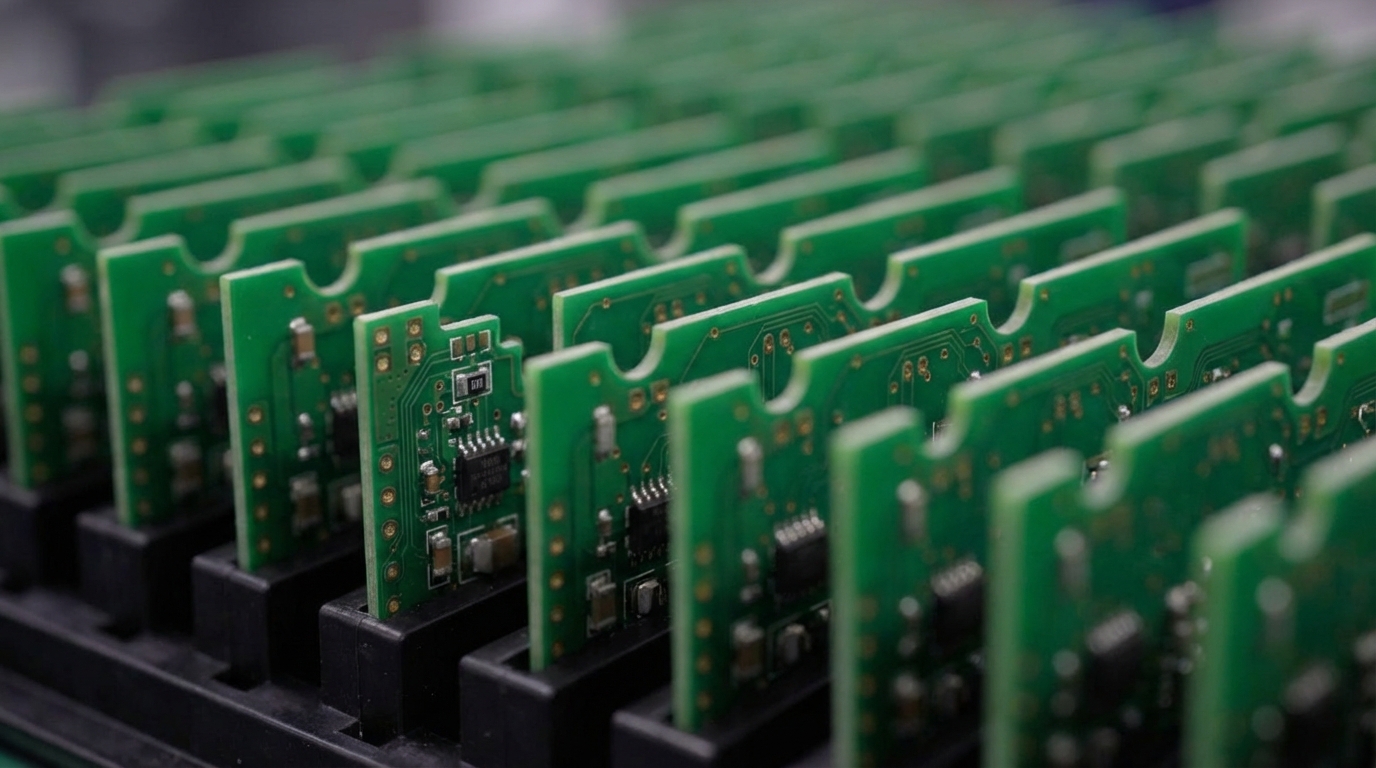
PCB manufacturing focuses on fabricating bare circuit boards, while PCB assembly covers populating those boards with components through surface mount technology (SMT), through-hole assembly, and protective coating applications. This distinction directly affects ITAR exposure.
ITAR risk rises sharply during assembly because teams handle controlled components and sensitive technical data. Assembly processes require defense-specific parts, access to detailed placement files, and integration of classified subsystems. Pro-Active Engineering delivers comprehensive PCBA services with box build capabilities and 100% Automated Optical Inspection (AOI) to maintain compliance throughout every step of the assembly workflow.
Operational Challenges in ITAR Assembly and Pro-Active’s Solutions
ITAR compliant PCB assembly presents several operational challenges that can derail defense programs. The most fundamental challenge involves vendor fragmentation across design, prototyping, assembly, and testing, which creates communication gaps and weak accountability.
This fragmentation amplifies other problems. When vendors work in isolation, Design for Manufacturing (DFM) issues surface late in development cycles instead of being caught early, which drives costly redesigns. The fragmented supply chain also introduces security risks because each additional vendor creates another potential compliance gap.
Extended prototype lead times from traditional aerospace suppliers compound these issues and slow the entire development cycle. Long cycles make it difficult to iterate quickly on designs that require DFM corrections while still maintaining strict ITAR controls.
Pro-Active Engineering addresses these challenges through integrated solutions:
- Consolidated workflow that removes vendor fragmentation from design through system integration.
- Speed Shop that delivers production-ready prototypes in 2–5 days with 1-piece minimum order quantities.
- Day-one DFM integration that prevents late-stage manufacturing issues.
- Advanced capabilities including wire bonding, flip chip assembly, and silver sintering thermal technologies.
- Manex ERP system that provides complete component traceability and audit trails.
How to Choose an ITAR Compliant PCB Assembly Partner
Effective partner selection for ITAR compliant PCB assembly requires evaluation of multiple criteria beyond basic certification status. Essential qualifications include current ITAR registration, AS9100 aerospace quality certification, and Nadcap accreditation for specialized processes.
Prototype turnaround capabilities directly affect development timelines, while integrated DFM and traceability systems reduce program risk and rework. The following comparison shows how leading ITAR-certified providers differ in certification depth, speed, and integrated systems, which directly influence both compliance risk and development velocity:
| Provider | ITAR/Nadcap Certs | Prototype Turnaround | Integrated DFM/Traceability |
|---|---|---|---|
| Pro-Active Engineering | Yes (ITAR/JCP/Nadcap/NIST) | 2-5 days | Yes (Speed Shop, Manex ERP) |
| Milwaukee Electronics | Yes (ITAR/AS9100) | 1, 2, 3, or 5 days | Yes |
| Ducommun | Yes (Nadcap) | Rapid | Yes |
| Advanced Assembly | ISO 9001:2015 and AS9100D | Rapid | Not specified |
Pro-Active Engineering’s broad certification portfolio and documented rapid prototyping capabilities position the company as a strong choice for high-mix, quick-turn defense electronics programs that require seamless design-to-production transitions.
Common ITAR Violations in PCB Assembly and How to Prevent Them
ITAR violations create severe financial and operational consequences for PCB assembly operations. Unlicensed exports represent the most common category of ITAR violations and often stem from classification errors, misunderstandings of ITAR exemption requirements, or weak transaction screening. DDTC maximum civil penalties for ITAR violations reached the greater of $1,271,078 or twice the value of the transaction per violation under 22 CFR §127.10(a)(1)(i) as of January 10, 2025.
Common violation categories include:
- Classification errors that lead to unauthorized exports.
- Foreign national access to controlled technical data without proper licensing.
- Inadequate physical security and cybersecurity controls.
- Poor documentation and traceability systems.
Pro-Active Engineering reduces violation risk through SAE AS5553B compliance protocols, disciplined documentation procedures, and CMMC readiness frameworks. The company’s 30-year compliance track record shows consistent adherence to evolving ITAR requirements.
Protect your program from costly violations and schedule a focused compliance review. Request a compliance assessment to identify gaps in your current assembly partner’s protocols.
Frequently Asked Questions
What makes a PCB assembler ITAR certified?
ITAR certification extends beyond DDTC registration described earlier and requires implementation of a comprehensive Technology Control Plan (TCP) and strict restriction of access to US persons only. Pro-Active Engineering maintains JCP certification and CAGE code 7R4Q2, which demonstrates full compliance with ITAR requirements for defense electronics manufacturing.
What are typical lead times for ITAR compliant prototypes?
Pro-Active Engineering’s dedicated Speed Shop delivers ITAR compliant prototypes in 2–5 days using full production processes. This rapid turnaround removes development bottlenecks while maintaining the same quality standards and compliance protocols used in volume production.
How does Pro-Active Engineering handle high-density defense boards?
Pro-Active Engineering provides advanced interconnect capabilities, including wire bonding, flip chip assembly, and hybrid high-density assemblies. All assemblies receive 100% AOI inspection and comprehensive testing to ensure mission-critical reliability in demanding defense applications.
How does ITAR compliant pricing compare to offshore alternatives?
Per-unit costs often run higher than offshore providers, but ITAR compliant domestic manufacturing usually delivers a lower total cost of ownership. Integrated engineering support, reduced rework, removal of compliance penalties, and faster time-to-market all contribute to that lower total cost. The consolidated workflow also reduces vendor management overhead and late-stage surprises.
Can Pro-Active Engineering scale from prototype to production?
Pro-Active Engineering’s 45,000 square foot facility and 120+ person workforce support seamless scaling from single-piece prototypes to high-volume production runs. The same processes, quality standards, and compliance protocols apply across all volume levels, which keeps results consistent throughout the product lifecycle.
Pro-Active Engineering serves as a trusted ITAR compliant PCB assembly partner for secure, rapid defense and aerospace projects. With 30 years of certified performance, integrated design-to-production capabilities, and industry-leading 2–5 day prototyping, Pro-Active Engineering removes the fragmentation and compliance risks that affect many traditional defense supply chains. Start your compliance audit and get your first prototype quote today.